Tutorial math and reading software for elementary and secondary arithmetic, basic math, algebra, geometry, precalculus plus GED, ABE, and CLEP preparation for elementary school, high school, college, adult education, and homeschool students.
The pendulum has swung too far in our schools

Product Description
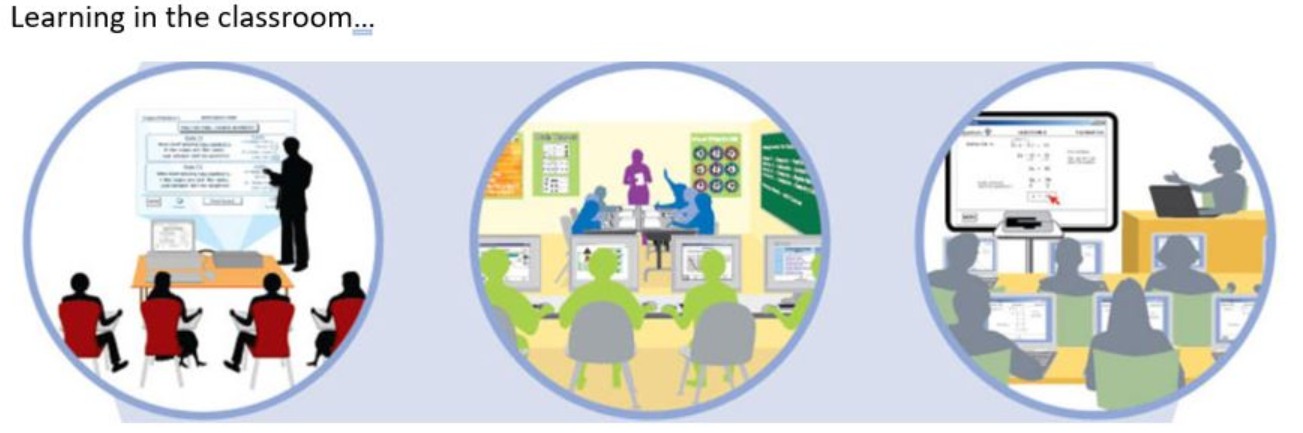
We’ve mistaken technology for progress...
These articles offer an educational voice to support learning in all its forms.
When I look at today’s classrooms, I worry that we’ve traded something precious for convenience.
Everything seems to be online now — homework, tests, even classroom conversation. Too much screen-based learning has quietly taken over, and with it, the human connection that used to make school feel alive.
During COVID, technology became our lifeline. It kept children learning when classrooms were empty and gave teachers tools to connect across distance. But the emergency has long passed, and instead of swinging back toward balance, the pendulum has kept swinging — so far that learning has become impersonal.
It isn’t just the Chromebook that’s at fault. It’s the growing belief that any screen can take the place of handwriting, eye contact, and conversation. Digital tools can make school efficient, but efficiency isn’t the same as engagement.
Children no longer know the simple joy of holding a pencil and making words and math appear on paper. They don’t get to cross out, doodle, or see their own messy progress. Typing is fast, but it’s also detached. Research shows that handwriting activates different parts of the brain related to memory and understanding. When students write by hand, they think more deeply.
And what about textbooks?
When I taught, students carried books — real books — that they could underline, dog-ear, or slip notes into. There was something grounding about that weight in their backpack and in their hands. They could flip back to reread a paragraph, trace a timeline with their finger, or see how one chapter built on another.
Now, with digital texts, everything is temporary. Scroll, click, close. No marginal notes, no visible progress, no sense of continuity. A textbook gave students a map; a laptop gives them a maze.
Parents once knew exactly what their children were studying — they could open the same history book or algebra text and help. Now, with everything online, that shared experience is gone. Parents are shut out, not by choice but by design.
We’ve mistaken technology for progress, but in truth, it’s often just a faster way to disengage. A student can click through an assignment without ever absorbing it. A teacher can grade online without hearing a student’s voice. The warmth that once filled classrooms has been replaced by keystrokes and notifications.
To be fair, teachers didn’t choose to lose the human touch — it slipped away while they were trying to keep learning alive through screens. Technology kept education afloat during a crisis, but now it’s time to bring balance back.
Technology should support learning, not define it. A laptop can’t notice confusion on a child’s face or encourage a hesitant hand to keep going. It can’t teach patience, empathy, or the confidence that comes from solving a problem step by step. Those lessons still live in human connection — in the look, the tone, the shared space between teacher and student.
Let’s use technology wisely — as a tool, not a crutch. Let’s reopen the notebooks, pick up the pens, and give parents a window back into their children’s learning.
Because the greatest irony of our digital age is this: in trying to make education accessible to everyone, we’ve made it personal to no one. It’s time to pull back from too much screen-based learning and restore what truly matters — the human side of education.
Author’s Note:
It may seem ironic that I, as an educational software developer, would write such an article.
But there are caveats...
It’s important to say that not all screen-based learning is the problem. What matters is how technology is used. At MathMedia Educational Software, Inc., our goal has never been to replace teachers — it’s to empower them. Our programs were created to support instruction, to give students the chance to learn at their own pace while keeping the teacher, parent, or tutor at the center of the process. Additionally, every screen in every one of our programs is printable to be used as paper and pencil instruction or classroom interaction, or teacher/parent interaction.
We believe technology should enhance learning, not isolate it. Used thoughtfully, it helps students gain confidence, independence, and understanding — the same qualities that once grew from pencil, paper, and conversation. The real lesson is balance: use digital tools to strengthen the human connection, not to erase it.
In Conclusion:
When every assignment, grade, and lesson lives behind a Chromebook/computer screen, something essential is lost — connection. The human element of learning — the warmth of a teacher’s glance, the satisfaction of pen on paper, the ability of a parent to peek at a child’s notebook and say, “Let’s fix this together” — has quietly vanished.
COVID accelerated an already-growing dependence on technology, and while it kept classrooms running, it also rewired how children relate to learning. Many students now type before they think, click before they comprehend, and swipe before they reflect.
The greatest irony is that in trying to make learning accessible to everyone, we’ve made it personal to no one. It’s time to swing the pendulum back — not away from technology, but toward humanity.
These articles offer an educational voice to support learning in all its forms.
When I look at today’s classrooms, I worry that we’ve traded something precious for convenience.
Everything seems to be online now — homework, tests, even classroom conversation. Too much screen-based learning has quietly taken over, and with it, the human connection that used to make school feel alive.
During COVID, technology became our lifeline. It kept children learning when classrooms were empty and gave teachers tools to connect across distance. But the emergency has long passed, and instead of swinging back toward balance, the pendulum has kept swinging — so far that learning has become impersonal.
It isn’t just the Chromebook that’s at fault. It’s the growing belief that any screen can take the place of handwriting, eye contact, and conversation. Digital tools can make school efficient, but efficiency isn’t the same as engagement.
Children no longer know the simple joy of holding a pencil and making words and math appear on paper. They don’t get to cross out, doodle, or see their own messy progress. Typing is fast, but it’s also detached. Research shows that handwriting activates different parts of the brain related to memory and understanding. When students write by hand, they think more deeply.
And what about textbooks?
When I taught, students carried books — real books — that they could underline, dog-ear, or slip notes into. There was something grounding about that weight in their backpack and in their hands. They could flip back to reread a paragraph, trace a timeline with their finger, or see how one chapter built on another.
Now, with digital texts, everything is temporary. Scroll, click, close. No marginal notes, no visible progress, no sense of continuity. A textbook gave students a map; a laptop gives them a maze.
Parents once knew exactly what their children were studying — they could open the same history book or algebra text and help. Now, with everything online, that shared experience is gone. Parents are shut out, not by choice but by design.
We’ve mistaken technology for progress, but in truth, it’s often just a faster way to disengage. A student can click through an assignment without ever absorbing it. A teacher can grade online without hearing a student’s voice. The warmth that once filled classrooms has been replaced by keystrokes and notifications.
To be fair, teachers didn’t choose to lose the human touch — it slipped away while they were trying to keep learning alive through screens. Technology kept education afloat during a crisis, but now it’s time to bring balance back.
Technology should support learning, not define it. A laptop can’t notice confusion on a child’s face or encourage a hesitant hand to keep going. It can’t teach patience, empathy, or the confidence that comes from solving a problem step by step. Those lessons still live in human connection — in the look, the tone, the shared space between teacher and student.
Let’s use technology wisely — as a tool, not a crutch. Let’s reopen the notebooks, pick up the pens, and give parents a window back into their children’s learning.
Because the greatest irony of our digital age is this: in trying to make education accessible to everyone, we’ve made it personal to no one. It’s time to pull back from too much screen-based learning and restore what truly matters — the human side of education.
Author’s Note:
It may seem ironic that I, as an educational software developer, would write such an article.
But there are caveats...
It’s important to say that not all screen-based learning is the problem. What matters is how technology is used. At MathMedia Educational Software, Inc., our goal has never been to replace teachers — it’s to empower them. Our programs were created to support instruction, to give students the chance to learn at their own pace while keeping the teacher, parent, or tutor at the center of the process. Additionally, every screen in every one of our programs is printable to be used as paper and pencil instruction or classroom interaction, or teacher/parent interaction.
We believe technology should enhance learning, not isolate it. Used thoughtfully, it helps students gain confidence, independence, and understanding — the same qualities that once grew from pencil, paper, and conversation. The real lesson is balance: use digital tools to strengthen the human connection, not to erase it.
In Conclusion:
When every assignment, grade, and lesson lives behind a Chromebook/computer screen, something essential is lost — connection. The human element of learning — the warmth of a teacher’s glance, the satisfaction of pen on paper, the ability of a parent to peek at a child’s notebook and say, “Let’s fix this together” — has quietly vanished.
COVID accelerated an already-growing dependence on technology, and while it kept classrooms running, it also rewired how children relate to learning. Many students now type before they think, click before they comprehend, and swipe before they reflect.
The greatest irony is that in trying to make learning accessible to everyone, we’ve made it personal to no one. It’s time to swing the pendulum back — not away from technology, but toward humanity.
- Educational Comments & Articles
- Schools and Institutions - Licenses
- MathMedia Education Bundles
- Arithmetic
- Basic Math Software Series - Fractions
Decimals
Percents
PreAlgebra
Geometry - ABE - Math
- Reading Comprehension-Critical Thinking Series with Phonics, Grammar, & Values
- Algebra by Chapter (Set of eight programs)
- Algebra by Topic
- Geometry
- Advanced Mathematics
- GED®Test Prep Bundle
- GED - Beginning Practice Math Test
- PSAT / SAT - Math
- College Level - CLEP Test Prep
- HOME USERS
- System Requirements
- Satisfied Customers
- Why Choose MathMedia?
- How to Use MathMedia - FAQ
- Article Archives
- ORDER FORM



