Tutorial math and reading software for elementary and secondary arithmetic, basic math, algebra, geometry, precalculus plus GED, ABE, and CLEP preparation for elementary school, high school, college, adult education, and homeschool students.
Genius Isn’t Always Reflected on the Report Card
Product Description
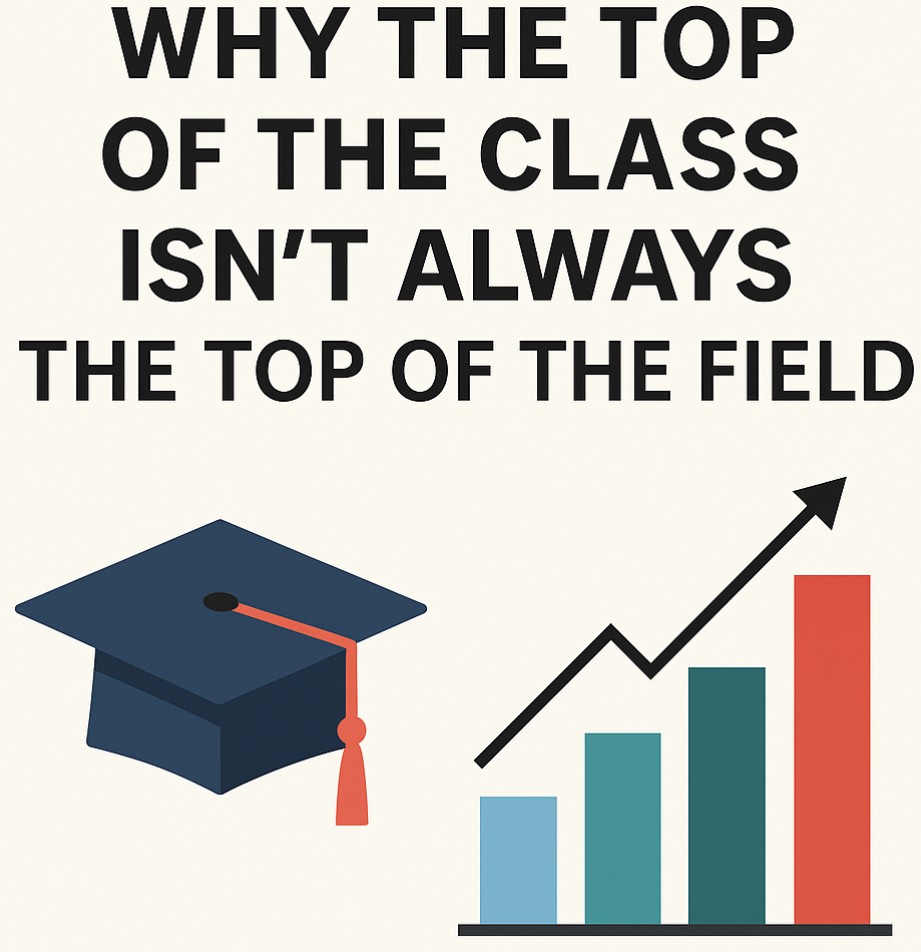
The biggest movers and shakers in any field were rarely the ones who graduated top of their class. They were too distracted—by ideas, by questions no one else thought to ask, by a world they sensed was larger than the textbook page. Many were barely noticed by their teachers. Some earned mediocre grades. A few even dropped out entirely. But what they lacked in report card sparkle, they made up for in vision. These were the students who doodled in the margins, who stared out the window, who asked “why” when the curriculum moves on to a track of standards they don't fit into. We call them geniuses later—but in school, they were often just seen as distracted.
“Everybody is a genius. But if you judge a fish by its ability to climb a tree, it will live its whole life believing that it is stupid.” —Albert Einstein
Grades reward compliance, not always creativity
Top students are often great at following rules and routines; true innovators often break or rewrite them. We often equate academic success with future greatness, but history tells a more complicated story. Valedictorians are excellent at what school asks of them—structure, discipline, memorization—but many of the people who transformed industries, launched revolutions, or reshaped art and science were following a different syllabus entirely. School wasn’t built for their kind of thinking. Their brilliance didn’t fit on standardized test. It showed up later—in a lab, a garage, a stage, or a courtroom—after the bells had stopped ringing.
Albert Einstein famously disliked rote schooling and clashed with teachers who expected obedience over imagination. Steve Jobs was once described as unfocused and reckless. Maya Angelou dropped out of high school and wandered the world long before becoming the voice of a generation. These stories aren’t exceptions. They are reminders that school evaluates one kind of mind—but society is built by many kinds.
The traditional education system favors compliance, speed, and accuracy. But the world is moved forward by those who are willing to sit with uncertainty, question the status quo, and try something that might not work. These qualities often look like daydreaming, rebellion, or disorganization in a classroom setting. But outside that setting, they are the seeds of innovation.
This isn’t to diminish academic achievers. Many go on to do extraordinary things. But this is a call to recognize that the future is not only being written by the students at the front of the room—it’s also being dreamed up by the ones who sometimes forget to turn in their homework.
What schools could do better
Encourage curiosity, tolerance for ambiguity, nonlinear thinking. As teachers, parents, and peers, we should make room for all kinds of learners. Instead of asking only who’s performing well, we might also ask: who’s quietly thinking differently? Who’s deeply curious, even if they’re disorganized? Who’s asking questions that don’t have neat answers?
The invisible student
Teachers may miss these students—not out of negligence, but because their gifts don’t show up on a rubric. Because those are often the ones who go on to write the new rules. And one day, we’ll look back and realize—they weren’t distracted after all. They were focused on something bigger.
“Everybody is a genius. But if you judge a fish by its ability to climb a tree, it will live its whole life believing that it is stupid.” —Albert Einstein
Grades reward compliance, not always creativity
Top students are often great at following rules and routines; true innovators often break or rewrite them. We often equate academic success with future greatness, but history tells a more complicated story. Valedictorians are excellent at what school asks of them—structure, discipline, memorization—but many of the people who transformed industries, launched revolutions, or reshaped art and science were following a different syllabus entirely. School wasn’t built for their kind of thinking. Their brilliance didn’t fit on standardized test. It showed up later—in a lab, a garage, a stage, or a courtroom—after the bells had stopped ringing.
Albert Einstein famously disliked rote schooling and clashed with teachers who expected obedience over imagination. Steve Jobs was once described as unfocused and reckless. Maya Angelou dropped out of high school and wandered the world long before becoming the voice of a generation. These stories aren’t exceptions. They are reminders that school evaluates one kind of mind—but society is built by many kinds.
The traditional education system favors compliance, speed, and accuracy. But the world is moved forward by those who are willing to sit with uncertainty, question the status quo, and try something that might not work. These qualities often look like daydreaming, rebellion, or disorganization in a classroom setting. But outside that setting, they are the seeds of innovation.
This isn’t to diminish academic achievers. Many go on to do extraordinary things. But this is a call to recognize that the future is not only being written by the students at the front of the room—it’s also being dreamed up by the ones who sometimes forget to turn in their homework.
What schools could do better
Encourage curiosity, tolerance for ambiguity, nonlinear thinking. As teachers, parents, and peers, we should make room for all kinds of learners. Instead of asking only who’s performing well, we might also ask: who’s quietly thinking differently? Who’s deeply curious, even if they’re disorganized? Who’s asking questions that don’t have neat answers?
The invisible student
Teachers may miss these students—not out of negligence, but because their gifts don’t show up on a rubric. Because those are often the ones who go on to write the new rules. And one day, we’ll look back and realize—they weren’t distracted after all. They were focused on something bigger.
- Educational Comments & Articles
- Schools and Institutions - Licenses
- MathMedia Education Bundles
- Arithmetic
- Basic Math Software Series - Fractions
Decimals
Percents
PreAlgebra
Geometry - ABE - Math
- Reading Comprehension-Critical Thinking Series with Phonics, Grammar, & Values
- Algebra by Chapter (Set of eight programs)
- Algebra by Topic
- Geometry
- Advanced Mathematics
- GED®Test Prep Bundle
- GED - Beginning Practice Math Test
- PSAT / SAT - Math
- College Level - CLEP Test Prep
- HOME USERS
- System Requirements
- Satisfied Customers
- Why Choose MathMedia?
- How to Use MathMedia - FAQ
- Article Archives
- ORDER FORM



